

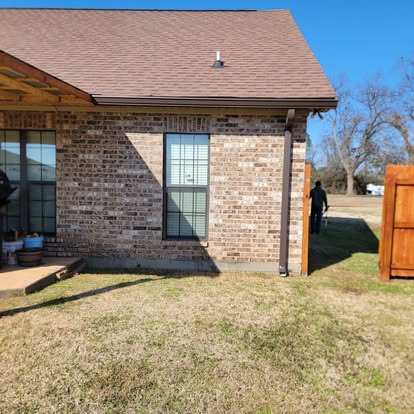
The grey on an old fence is sun-worn wood fiber, not dirt, and the green and black on it are living growth. Both come off with low pressure and the right cleaner. High pressure strips the grey fast, then leaves furred grain and wand marks that show through stain for the rest of the fence’s life. Check your pickets and rails first, let the wood dry a few days, then stain.
A wood privacy fence in the Ark-La-Tex takes a beating most folks never think about until the day they walk out back and notice the whole run has gone the color of an old barn. West sun on one face, shade and wet grass on the other, and humidity sitting on all of it from April into October. The good news is that a fence like that is fixable far more often than people expect. What is usually not fixable is what a rented pressure washer does to it on a Saturday afternoon.
That Grey Coat Is the Wood, Not Dirt
The grey confuses people because it looks like filth and behaves nothing like it. What you are seeing is the wood’s own surface, changed by sunlight. Ultraviolet light breaks down lignin, the natural glue holding the surface fibers together, and what remains on top is a thin layer of loose, colorless cellulose. Rain carries the broken-down lignin off and the sun starts working on the fiber underneath. Scratch a grey picket with your thumbnail and you will usually find sound, honey-colored wood sitting a hair below. That is why a fence that looks dead usually is not. You are only lifting one very thin layer, which is exactly why force is the wrong tool for it.
Green on the Shady Side, Black Nearly Everywhere
The other two colors on your fence are alive. That green fuzz on the north side, and on whatever face the neighbor’s oak keeps in shade all afternoon, is algae. It wants moisture and it wants the sun kept off, and a shaded fence line in east Texas hands it both for most of the year. You will find the same green running along the bottom rail all the way around, because the grass down there holds water long after the rest of the fence has dried and the sprinklers keep topping it off. The black speckling is mildew, and in this humidity it settles on any board that stays damp. Neither one scrubs off. Both have to be killed, which is why soft washing chemistry belongs in this job.
What High Pressure Does, and Why It Never Goes Away
A pressure washer will absolutely take the grey off. It will also take off a good deal of what is underneath. Wood at high pressure does not clean, it erodes. The soft spring growth in the grain blows out faster than the hard summer growth beside it, so the board comes back furred and washboarded, rough enough to catch a rag. Then come the wand marks, those darker stripes and arcs left where the tip lingered or the operator changed speed. On bare wood they look faint and forgivable. The day stain goes on, they become the first thing any visitor sees, because torn fiber drinks pigment far faster than smooth fiber does. Those marks live down in the wood, and no second cleaning takes them out.
Low Pressure and the Right Cleaner Is the Whole Method
Cleaning a fence correctly is boring to watch, which is a good sign. We wet the wood and the ground around it first, then apply a cleaner and let it sit. Sodium percarbonate, an oxygen-based cleaner, lifts the grey and stays gentle on the fiber. Where algae and mildew have taken hold, a properly diluted hypochlorite blend with a surfactant kills the growth at the root instead of knocking the top off it. Either way, the chemistry works while it dwells, and the rinse comes at a pressure low enough that you could hold your hand in front of it. Most fences then get an oxalic acid brightener, which neutralizes the cleaner, pulls out tannin darkening and rust bleed around the fasteners, and evens the color from board to board.
Cedar and Pressure-Treated Pine Get Different Plans
Most fences around Marshall and Longview are pressure-treated pine, with cedar showing up on the nicer runs. The two behave differently under a cleaner. Cedar is soft and full of natural tannins, and it turns dark and blotchy if a cleaner sits too long or runs too strong, so it gets a milder mix, a shorter dwell, and it genuinely needs the brightener afterward to come back to that warm red-brown. Pressure-treated pine is harder and far more forgiving on chemistry, though it raises grain more readily and tends to green up around the fasteners. Pine also holds moisture longer, which matters a great deal once you reach the staining step.
Walk the Fence Before You Wash It, Not After
This is the step homeowners skip and then regret. Before any water touches the wood, we walk both sides and push on things. Post bases get probed, since rot in this soil starts below the dirt line and works its way up where nobody can see it. Rails get checked at the ends, where fasteners pull loose and a section starts to lean. Pickets get a look along the bottom few inches, which is where they go soft first from splash-back off the ground. Finding a bad picket after the fence is clean and wet leaves you living with it or patching in a board that will not match. Finding it first means we swap it, wash everything together, and the repair disappears.
The Neighbor’s Side Is Part of the Job
A privacy fence has two faces and only one of them is yours, which puts folks in an awkward spot. Our answer is simple. We clean the side you own, and we knock on the door and ask about the other one. Most neighbors say yes right away once they hear it costs them nothing and adds a few minutes. Some say no, and that is their right. What we will not do is spray over the top of a fence into somebody’s yard, their beds, or their patio furniture without asking first. If nobody is home, we leave a note and come back. Being the sort of neighbor you would want next door has never once cost us a customer.
Let It Dry Before You Stain It
Washing opens the wood up, and stain will not hold on wood that is still carrying water. In our humidity that means waiting, usually two to three clear days after the wash, and longer if the weather will not cooperate or the fence sits in heavy shade. A moisture meter takes the guessing out of it, and we want the boards reading in the low teens or under before any stain or sealer goes on. The old trick works too: sprinkle water on a picket, and if it beads up instead of soaking in, the fence is not ready for you yet. Staining damp wood is how people end up with a cloudy, peeling finish and a fence that has to be stripped and started over.
When a Fence Is Past Saving
We would rather tell you the truth than take the job. A fence is worth restoring when the posts are solid, the rails are sound, and the pickets are weathered but still firm. Grey does not mean gone. What does mean gone is a run where a screwdriver sinks into the posts, where rails have pulled free across several bays, or where a third of the pickets are cracked, cupped, or crumbling at the bottom. Washing that fence buys you a clean fence that is still failing, and the stain money goes right along with it. Often it is a mix, one bad section and eighty feet of perfectly good wood, and the honest call is rebuilding the bad run and restoring the rest. We will walk it with you and tell you which one you have.
Common Questions
Can I clean my own fence with a rented pressure washer?
You can, and most of the damage we get called out to fix started exactly that way. If you do it yourself, use the widest tip you own, keep the pressure down, stay well back from the boards, and let a cleaner do the lifting instead of the water.
Will my fence look brand new when you are finished?
It will look like clean, healthy wood, which reads warm honey or red-brown depending on the species. What a wash cannot do is erase deep weathering or old damage. Stain afterward is what carries the color the rest of the way back.
How long after cleaning before I can stain or seal?
Two to three dry days is typical here, longer in shade or after a wet stretch. We check with a moisture meter rather than guessing, because stain laid over damp wood clouds and starts peeling within a season.
Do you clean the neighbor’s side of the fence?
We clean your side, and we ask the neighbor about theirs before anything goes over the top. Most people say yes once they hear it costs them nothing. If nobody is home we leave a note and come back rather than surprising them.
Is the cleaner safe around my grass, beds, and dog?
Yes, handled properly. We pre-soak the landscaping, keep it wet through the dwell time, and flush it again on the rinse. Pets stay inside while we work and come back out once the fence is rinsed and the yard is watered down.
How often should a wood fence be washed in the Ark-La-Tex?
Every two to three years suits most fences, and closer to every other year on a shaded run or one catching sprinkler spray. Staying on a schedule means a light wash each time instead of a rescue.
Let’s Get Your Fence Looking Right Again
Free, no-obligation quote on wood fence washing across east Texas and northwest Louisiana. Never a travel fee.
Schedule a Wash Call (318) 401-2772Read more on our Fence Cleaning service page, see how we handle Deck Cleaning, browse the recent project gallery, or send us a note about your fence.