
Greenwood Soft Washing
Low pressure, a cleaning solution mixed for whatever is growing on the wall, and a gentle rinse. That is how we clean painted lap siding, vinyl, soffits, fascia and gable trim on homes that sit under heavy tree cover. A crew of friends out of Marshall, a free quote before any hose comes off the truck, and no travel fee inside our service radius. Call (318) 401-2772.
Low Pressure, Real Cleaning
A pressure washer cleans by force. Hold the tip close to a painted board and it will take off the dirt, the chalky top layer of paint, and sometimes a strip of good paint along with them. Aim it up at vinyl and the water slips behind the laps, where it sits against the sheathing with nowhere to drain. That is the damage people picture when they hear the word pressure, and they are right to be wary of it.
Soft washing turns the job around. We put a cleaning solution on the wall at roughly garden hose pressure, mixed for what is actually there: green algae, black mildew, spider webbing, or plain road film. The solution sits long enough to break the growth loose, and then a gentle rinse carries it away from the top down. Nothing gets blasted. Nothing gets forced behind the siding.
This is how we wash most house exteriors in Greenwood, because most of what grows on a wall here is alive and rooted in the texture of the paint. Kill it at the root and the wall stays clean longer than one scrubbed by force. The whole method, start to finish, is laid out on our soft washing service page.
Surfaces That Want the Gentle Method
Three parts of a house where low pressure earns its keep.
Painted Lap Siding and Vinyl
Every lap board has a lip along its bottom edge, and that lip collects pollen and spores in a long straight line. A soft wash gets into each lap without lifting the paint. Vinyl gets the same treatment, since a wand aimed upward drives water behind the panel and leaves it trapped where it can stain from the inside.
Soffits, Fascia and Gable Trim
Up under the eaves the wood stays shaded and damp, so mildew settles in and spreads in dark freckles. We spray solution up there from the ground or a ladder, give it time, and rinse it clean. Gable trim gets extra attention, since anything growing at the peak streaks all the way down the board.
Screened Porches
Screen fabric tears under a wand, and the frames collect a gray film that pressure only pushes deeper. Solution and a light rinse clean the screens and the framing together. We prop the porch door, move what we can off the floor, and rinse the floor last so nobody tracks the mess indoors.
Why the Shaded Wall Goes Gray-Green First
Walk around almost any house in this corner of Caddo Parish and one wall will look worse than the others. It is the side that sits in shade most of the day, usually under the pines or a big oak. Sun is what dries a wall after rain and morning dew. A wall that never fully dries hands algae and mildew exactly what they need, and the humid air here keeps that wall damp for most of the year.
Then the trees add food. Pine needles and pollen drift onto the siding and settle in the laps, and the growth feeds on that layer. At first it shows as a faint gray haze. A season later it reads green, and on painted wood it can turn nearly black along the bottom edge of each board.
We treat that shaded face with a stronger mix and a longer dwell than the sunny side gets.
A house is rarely dirty in one even coat, so we do not clean it like one.
Tell us which wall bothers you most when you call, and that is the one we will walk first.
Streaks Running Down the Gable Trim
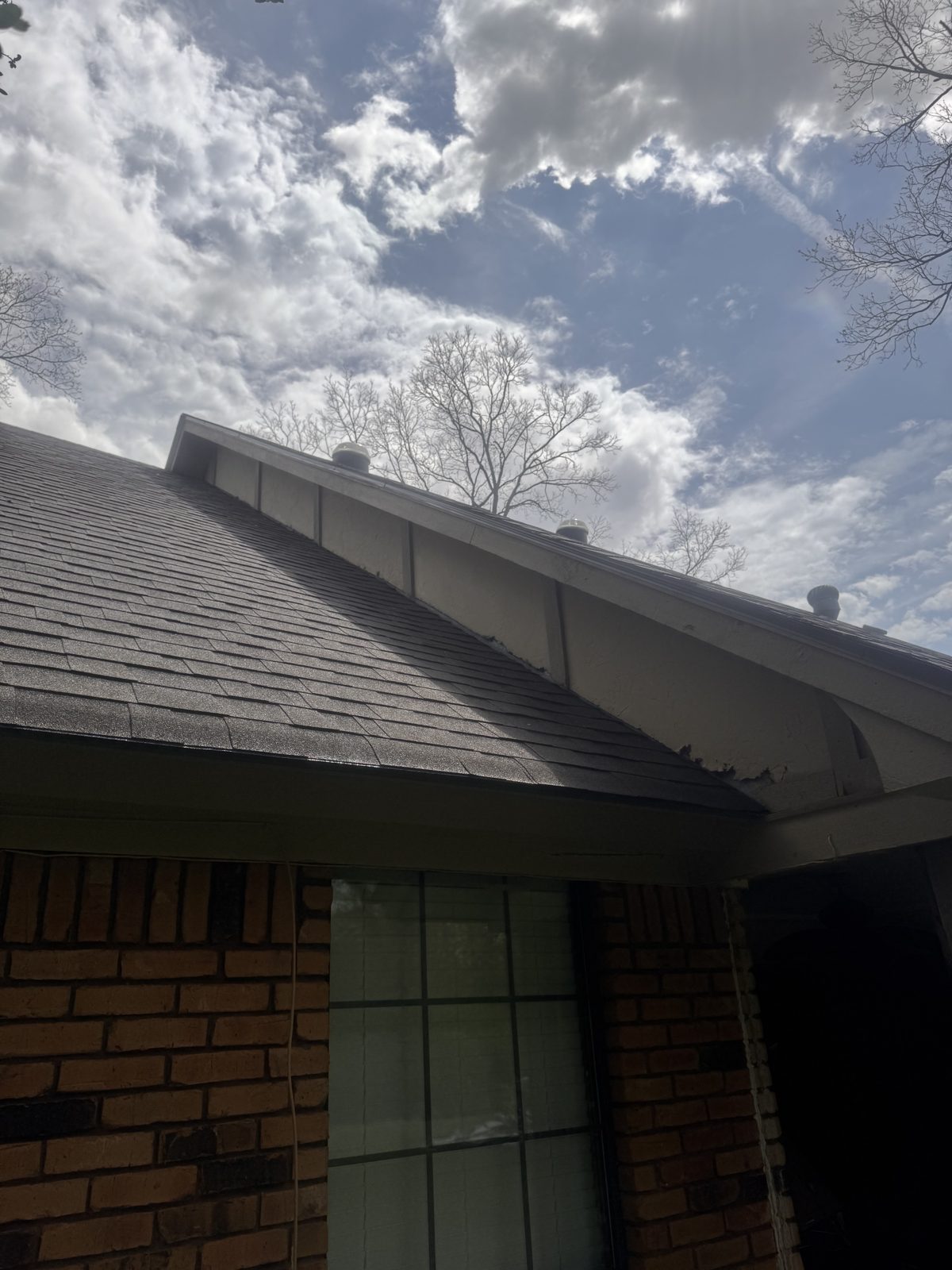
Homes with brick walls and painted trim show this more than any other style. The brick holds up fine, but the tall white board at the gable shows every streak. Water sheds off the roof edge, picks up whatever is growing along the shingles, and drags it down the face of the trim in long dark lines.
Scrubbing those lines with a brush usually smears them and scuffs the paint. A soft wash lifts them instead. We wet the brick and the window below first, apply solution to the trim from the peak down, let it work, and rinse so the runoff leaves the brick clean on its way to the ground.
If the paint on a trim board is already flaking, a wash will make that easier to see, and we will mention it before we start. Cleaning brings sound paint back. Loose paint still needs a painter.
Condensers, Generators and Flower Beds
Most side walls are not empty. The one we see over and over has an AC condenser, a standby generator on its own pad, a meter, and a couple of electrical boxes all within a few feet of each other. Each of those can be washed around safely, though not by a crew in a hurry.
We keep spray off the condenser coils and the generator housing, and we never point water into a meter base, a disconnect box, or an outdoor outlet. If you would like the condenser shut off while we work that side, say so and we will switch it back on before we pack up. The round gable vent gets a low rinse aimed downward so nothing blows into the attic.
Plants are protected the whole way through. Before any solution touches a wall, we soak the shrubs and beds along it with plain water so the leaves and soil are already full and will not drink in runoff. After the rinse we water them down again. Anything delicate in a pot gets carried out of the way before we start.
Before We Pull Into the Drive
There is not much you need to do. Close the windows on the sides we are washing, and if a window seal already leaks in a hard rain, tell us, since you know the house better than we do. Move cars that are parked tight against the wall. Bring patio cushions, doormats and the kids’ toys inside or out into the yard.
If you have dogs or cats that go outside, keep them in until the rinse is finished and the beds have been watered down. Unlock any side gates so we can reach the back without knocking on the door.
Timing matters more than most people expect. Spring pollen comes down hard under the pines, and washing a house a week before it falls means paying to do it twice. Spring and early fall are the best windows for most homes. A wash after the heaviest pollen drop holds up longest, and an early fall visit strips off what grew over the summer.
Other Work We Do Around Greenwood
Add any of these to the same trip out.
One Crew, Every Side of the House
Greenwood sits on the Texas line, a straight drive down I-20 from Marshall, and there is no travel fee to get here. If any spot is missed, we return and make it right at no added cost. Tell us about the house and we will set up a free quote.
Questions About Soft Washing
Will soft washing hurt my vinyl siding?
No. The pressure at the wall is low, close to what a garden hose puts out, so nothing gets driven behind the panels and no brittle corner cracks. The cleaning solution does the work. We rinse every panel from top to bottom so no residue dries on the face of the siding.
Is the cleaning solution safe for my shrubs and flower beds?
Yes, when it is handled right, which is why we soak every bed with plain water before we start and again after the final rinse. Wet leaves and wet soil do not soak up runoff. Delicate potted plants get moved away from the wall before any spraying begins.
Can you clean soffits and fascia without a lift?
On a single story home, yes. We reach the eaves from the ground with extension wands or from a ladder, apply solution up under the overhang, and rinse it clean. Taller gables on a two story house take more setup, and we will tell you that when we give your free quote.
Why does one side of my house always look worse?
That side gets the least sun. Shade keeps the siding damp after rain and dew, and pollen and needles from the trees overhead give algae something to feed on. We mix a stronger solution for that face and give it more time to work before we rinse it off.
When is the best time of year to book a soft wash?
Spring and early fall work best for most homes. Booking right after the heaviest pine pollen comes down keeps the wall clean longer, and an early fall wash clears the summer growth before the cooler months. If your schedule needs a different month, call and we will find a dry week.
Do I need to be home while you work?
Not usually. We need the side gates unlocked, the windows shut, a working outdoor spigot and any pets kept inside until we finish. Plenty of homeowners like to walk the house with us at the end, and we are glad to do that if you are around.
Get the Green Off the Siding
The free quote is no-obligation, and we look at every side of the house before we give it. Send us your address and a photo of the worst wall if you have one handy, and we will find a dry day that suits you.