
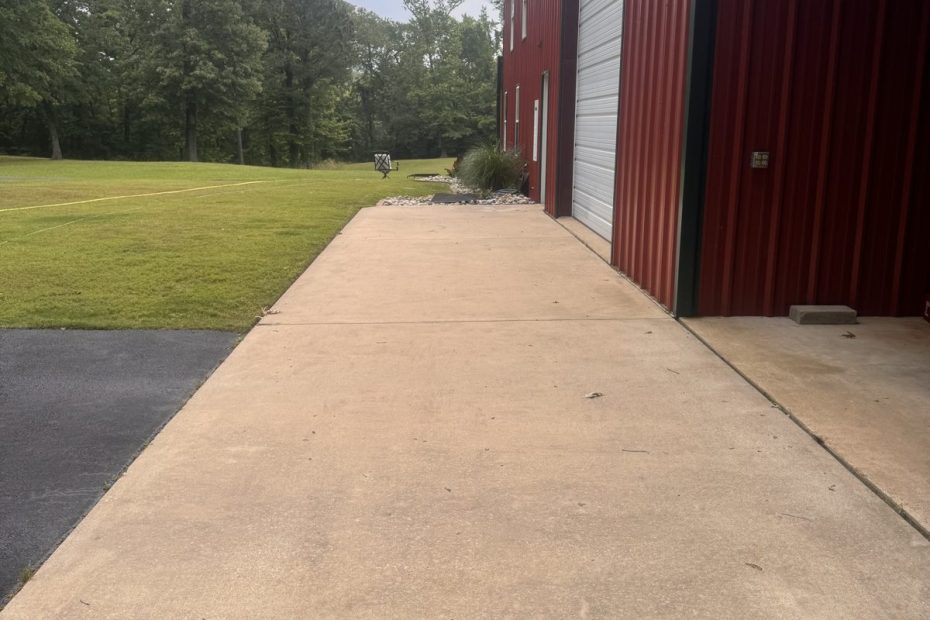
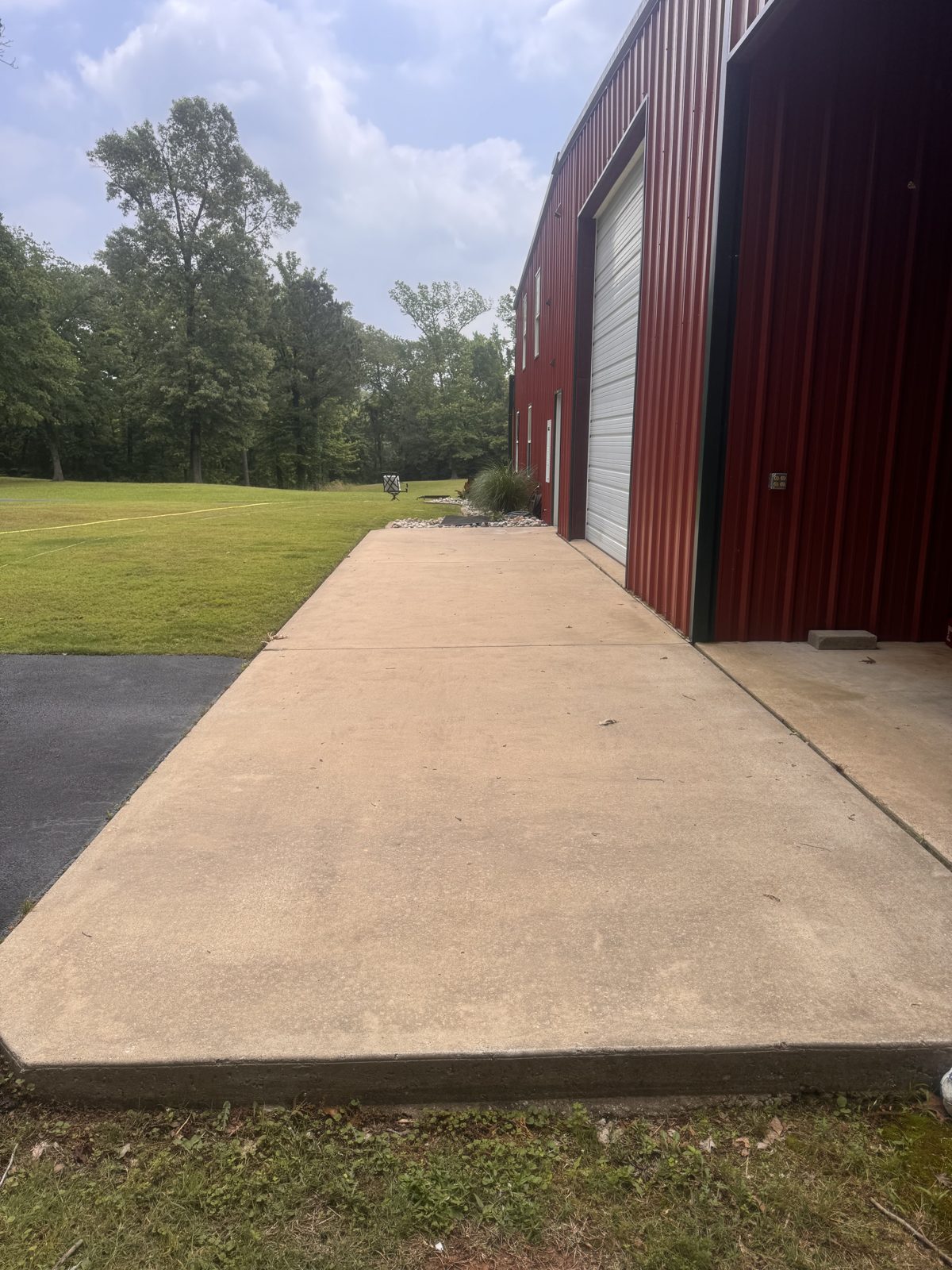
A detached metal shop is three jobs in one visit. The painted panels get a gentle wash with solution and a soft rinse. The roll-up door gets cleaned panel by panel with its seals and tracks in mind. The concrete apron out front, where the oil, tire marks and red clay pile up, gets a surface cleaner so the finish comes out even instead of striped.
Plenty of Greenwood properties sit on bigger lots, and a lot of those lots have a metal building out back or off to the side of the drive. Some are garages, some are full workshops, and some hold the mower, the boat and twenty years of everything else. They get used hard and washed rarely. By the time someone calls us, the panels have gone dull and green on the shady end, the door is gritty to the touch, and the slab in front of it is a map of every vehicle that ever parked there.
What a Metal Shop Collects on a Wooded Lot
A shop under tall trees catches everything those trees drop. Pine needles slide off the roof and pile along the base of the wall. Pollen lands on the flat face of every panel each spring and turns into a sticky film once the dew hits it. On the end that never sees afternoon sun, that film turns green.
The bottom of the wall takes a beating of its own. Rain bouncing off bare ground or gravel splashes red clay a foot or two up the panels, and the clay stains the paint a rusty orange that looks like corrosion from the drive. Most of the time it is just dirt. Underneath, the panel is usually fine.
Then there are the spots people work. Around the man door and the roll-up door, hands and shoulders and equipment rub the paint every day. Grease fingerprints, scuffs from a trailer tongue, and dark smears where a tool cart leans against the wall all build up faster than anything else on the building.
Painted Panels Get a Wash, Never a Blast
Painted metal looks tough, and that is exactly why it gets abused. A narrow pressure tip held close can strip paint at the panel edges, drive water past the screws and the trim, and leave bright lines where the factory finish used to be. We do not run that risk on a shop wall.
Instead the panels get a cleaning solution applied at low pressure, a few minutes to work, and a rinse that sheets down from the top of the wall. That lifts the pollen film, the green growth and the clay splash without touching the paint itself. The full scope for shops, garages and carports is laid out on our Greenwood garage washing page.
One thing a wash will not do is bring back faded color. If you rub a panel and your hand comes away chalky, the paint itself is breaking down. That is a separate job with separate chemistry, and our oxidation removal service is where it belongs. We will tell you which one your building needs before we start.

The Roll-Up Door, Its Seals and Its Tracks
The roll-up door is the face of the building and usually the dirtiest part of it. Each horizontal panel has a lip along the top that catches dust and pollen, so a door can look clean from a distance and still have a gray line under every ridge up close. We wash it closed, top to bottom, and work the solution into those lips with a soft brush where the dirt has packed in.
The bottom seal sits right where the clay splashes and the slab runoff pools. We clean along it and check that it is still seated when we finish. The side tracks collect grit that grinds against the rollers every time the door goes up, so we rinse them out gently and leave the lubricated parts alone.
We do not open the door partway and spray underneath it. Water thrown into the shop lands on whatever you keep in there, and there is no reason for it.
Oil, Tire Marks and Red Clay on the Apron
The concrete apron in front of a shop door takes more abuse than any driveway. Trucks idle there, mowers get fueled there, and a leaky tractor might sit on the same spot every weekend for years. Add tire marks from turning on the slab and the red clay tracked in off the yard, and the apron ends up a patchwork.
We pre-treat the oil spots and the clay before the main wash, because each one needs its own chemistry and some dwell time to loosen. Then the whole apron gets a rotary surface cleaner, which holds the spray at a fixed height and spins it evenly across the concrete. That is what keeps the finish from coming out with the wand stripes you see on a homeowner’s rental-machine job. Edges, joints and the strip against the building wall get a careful hand pass afterward.
If you also have a block wall on the shop or a block foundation showing, our Greenwood brick and block restoration page covers that work.
Clearing the Door and Watching Where the Water Goes
Most shops have a little life parked out front. Potted plants by the man door, a watering can, a stack of bags, a bike, a cooler that never went back inside. We move what we can before we start, so the apron gets cleaned edge to edge, and we put it back where it sat when we are done. Anything you would rather we leave alone, just say so.
Rinse water needs somewhere to go, and we look at that during the walk. On a sloped apron it runs toward the drive or the yard, and we keep the solution diluted and rinsed so the grass along the edge does not suffer for it. River rock beds and flower borders next to the wall get wet down first. Oily runoff is something we pay attention to, because nobody wants it sitting in their yard, so the worst spots get treated and lifted rather than simply chased off the slab.
Pictures of finished slabs and shop walls are in our project gallery.
Common Questions
Will washing take the fade out of my shop’s metal panels?
No. A wash removes pollen, growth, clay splash and grease, and the color underneath will look much better for it. If the paint itself has gone chalky, the fade is in the finish, and that needs oxidation removal rather than a wash. We check by rubbing a panel and show you what came off.
Should the roll-up door be open or closed while you work?
Closed. We wash the outside of the door top to bottom and clean along the bottom seal and the side tracks. Leaving it shut keeps water off everything stored inside. If you need it open at some point for a vehicle to come out, we will stop and work around that.
Will every oil stain come out of the apron?
Fresh drips and surface oil lift well with a pre-treatment and the surface cleaner. A spot where a vehicle leaked into the same place for years has soaked deep into the concrete, and it usually lightens a lot but leaves a faint shadow. We tell you which spots are which before we start.
Get the Shop and the Slab Washed Together
Free quote once we have looked at the panels, the door and the apron with you on site.
Schedule a Wash Call (318) 401-2772Shops, garages and carports are all on our Greenwood garage washing page, the rest of our work around town is on the Greenwood service page, and you can send us a note about your building whenever it suits you.