
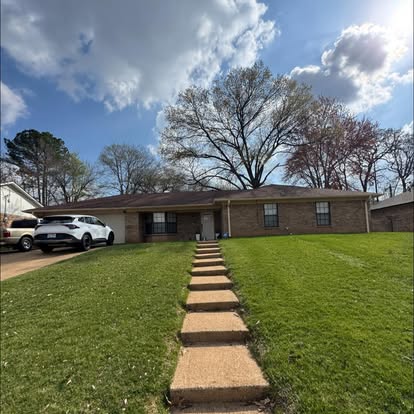
A Bossier City driveway collects red-clay tannin, oil drips, rust, and a shade-line algae film fed by Red River humidity. Each stain needs its own pre-treatment, not a single generic cleaner. We sweep the slab with a flat-surface cleaner for an even finish, then seal on request so the next stain beads up instead of soaking in. Sealing matters more here than inland because the damp air drives moisture and growth back into bare concrete fast.
Your driveway is the first hard surface anyone sees, and in Bossier City it takes a beating from four directions at once. The Red River keeps the air damp, the shaded edges grow a slick green film, spring storms wash clay and silt across the concrete, and the vehicles parked on it drip oil and transmission fluid. Add tire marks and fertilizer rust and a driveway can read a decade older than the house behind it. Here is what actually cleans a Bossier City slab, and when sealing it is worth the money.
Why a Garden Hose Will Not Cut It
Most Bossier City stains live below the surface, not on top of it. Oil soaks down into the pores of the concrete, red-clay tannin bonds into the texture, and algae roots into the shaded micro-pits. A garden hose, and even a plain pressure wand, just rinses the top and leaves the shadow underneath. Worse, a wand held by hand sprays the slab at uneven distances and leaves zebra-stripe streaks that look almost as bad as the dirt did.
The right tool is a flat-surface cleaner: a rotating attachment that holds two pressure jets at a constant height and sweeps the concrete in overlapping passes. That constant height is what produces an even tone edge to edge instead of patchy lanes. We use the wand only for detail work along borders, expansion joints, and stairs.
The Four Stains a Bossier City Driveway Collects
- Red-clay tannin: the orange staining tracked off river-bottom soil. Needs a dedicated tannin remover, applied and given time to dwell. Plain pressure will not move it.
- Oil and grease: soaked into the pores. We pre-treat with a degreaser that pulls the stain up before any pressure touches it. Fresh drips usually lift completely; years-old stains lighten.
- Rust: from iron sprinkler heads, metal furniture, and some fertilizers. We use an oxalic acid pre-treatment made for it.
- Algae and mildew: the slick shade-line film the river humidity keeps feeding. A sodium hypochlorite blend kills it at the root so it does not just grow right back.
Most Bossier City driveways carry at least two of these at once. The wash itself is the same surface-cleaner pass; the pre-treatment decides whether the slab returns to factory color or just a few shades lighter. We identify each stain on the quote so there are no surprises.
When Sealing Is Worth It in Bossier City
Sealing matters more here than in a drier town, and the Red River is the reason. That damp air drives moisture and biological growth back into bare concrete faster, so an unsealed Bossier City driveway re-stains and re-greens sooner. A penetrating siloxane sealer fills the pores so the next oil drip, clay splash, or rain beads up and wipes away instead of soaking in, and it slows the return of the shade-line algae. On most properties the sealer pays for itself within two years in saved wash frequency alone.
We carry two kinds. Penetrating siloxane leaves the concrete looking exactly as it does dry, with no color change and no shine. Acrylic adds a slight wet-look enrichment that deepens the color and adds light gloss. We will mock up a small test patch so you can see both before committing. Sealer goes on only after the slab is fully clean and dry, usually a return visit a day or two later, so it bonds correctly.
The Freeze-Thaw Factor
Bossier City gets a handful of hard freeze mornings each winter on top of all that humidity. Water that soaked into bare concrete during a damp week expands when it freezes, and that is what flakes the top layer off unsealed slabs over time, the spalling you see on older driveways. Sealing breaks the cycle by keeping the water out of the pores in the first place, which is why the wash-and-seal combo is the most durable result we offer here.
Maintenance Wash or Full Restoration?
Not every Bossier City driveway needs the same job, and it saves you money to know which one yours is. A maintenance wash is for a slab that gets cleaned every year or two: the grime is on top, there is no deep staining, and a single surface-cleaner pass brings it right back. That is the cheapest, fastest option and the one we push most homeowners toward once their concrete is on a regular cycle. A restoration is for the driveway that has been ignored for a decade: layered clay, old oil shadows, deep algae in the shade line, maybe rust bleed from a sprinkler head. That one needs multiple pre-treatments, longer dwell times, and sometimes a second pass. We will tell you plainly which situation you are in, because quoting a restoration on a slab that only needs a maintenance wash is exactly the kind of upsell we built this company to avoid.
How to Tell If Your Seal Is Still Working
If your driveway was sealed at some point and you are not sure it still is, there is a five-second test anyone can do: pour a cup of water on it. On a sealed slab the water beads up and sits on the surface. On bare or worn-out concrete it darkens the spot and soaks straight in. When it soaks in, the seal is gone and the pores are open again to the next oil drip, clay splash, and freeze cycle. In Bossier City’s damp, a penetrating siloxane seal generally runs three to five years and an acrylic film runs two to four before that bead test starts to fail. We run the same test as a free check on every annual wash, so you are never guessing whether it is time to reseal.
Common Questions
Can you get oil stains out of my Bossier City driveway?
Most of the time, yes. We pre-treat oil with a degreaser that pulls it up out of the pores before we apply pressure. Fresh drips usually lift completely; years-old stains may lighten rather than vanish, and we will tell you which to expect before we start.
Will the red-clay stains come off?
Yes. Red clay leaves an orange tannin stain that plain pressure will not touch, so we carry a dedicated tannin remover that we apply, let dwell, and rinse. The slab comes back a consistent gray instead of staying mottled orange.
Should I seal my driveway in Bossier City?
For most homeowners, yes, because the Red River humidity drives moisture and algae back into bare concrete faster than a drier climate would. Sealing keeps stains and water out of the pores and slows the shade-line algae.
How long after sealing can I drive on it?
Foot traffic in 4 to 6 hours; vehicle traffic in 24 hours. We schedule sealing in the morning so the cure window is over before the next day.
How can I tell if my driveway still has a seal on it?
Pour a cup of water on it. If the water beads up and sits on top, the seal is still working. If it darkens the spot and soaks straight in, the seal is gone and the concrete is open again to stains and freeze damage. A penetrating siloxane seal usually lasts three to five years here and an acrylic film two to four. We run this same test free on every annual wash.
Will pressure washing crack my concrete?
No. Sound concrete handles surface cleaning easily. We match the pressure to the slab and never linger in one spot. If concrete is already spalling or cracked we adjust our approach and point it out before we begin.
Ready to Clean and Seal Your Bossier City Driveway?
Free, no-obligation quote. Even, streak-free concrete with optional sealing, and no travel fee in Bossier Parish.
Get Your Free Quote Call (318) 401-2772Read more on our Bossier City Driveway Cleaning and Concrete Sealing service pages, our Bossier City overview, or see our recent project gallery.